Cactus Patterns: Seamless Vector Design for Professional Print and Digital Applications
Seamlessly repeating vector patterns rooted in botanical motifs—particularly Cactus Patterns—have emerged as a quiet powerhouse in visual design. Unlike fleeting trends, these patterns combine ecological resonance with technical precision, offering designers, educators, product developers, and print professionals a versatile, scalable, and deeply functional asset. At their core lies a marriage of organic inspiration and rigorous digital craftsmanship: each pattern repeats without visible seams across any dimension, maintaining clarity and consistency whether scaled to a business card or a 20-foot mural.
What Makes These Cactus Patterns Technically Distinct?
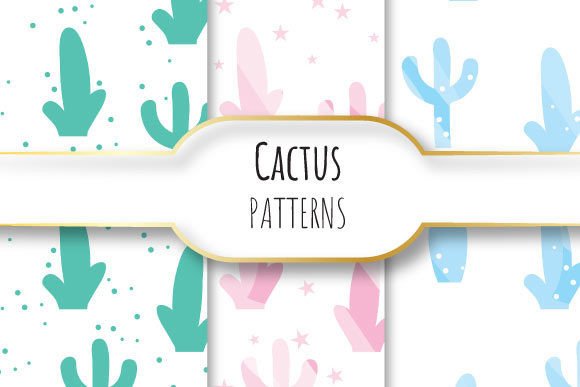
The files described—12 × 12 inches (3600 × 3600 pixels at 300 dpi), delivered in EPS 10 format alongside high-fidelity JPEGs—are engineered for fidelity across contexts. The 300 dpi resolution ensures crisp output for offset lithography, screen printing, and fine-art reproduction. The 3600-pixel square canvas provides ample headroom for cropping, tiling, or integration into larger composites without interpolation artifacts.
EPS 10 is not merely a legacy format—it’s a deliberate choice for reliability. As an encapsulated PostScript standard, EPS 10 supports vector paths, embedded fonts, transparency, and CMYK color definitions—all preserved intact when opened in Adobe Illustrator, CorelDRAW, Affinity Designer, or modern PDF workflows. Unlike raster-only assets, these Cactus Patterns remain infinitely scalable: a single cactus silhouette can expand to fill a textile repeat or shrink to accent a UI icon without pixelation or loss of edge integrity.
The zip package includes three unique EPS files and corresponding JPEGs—not as redundancy, but as workflow flexibility. Designers use EPS for editing, layering, and color adjustments; JPEGs serve as quick previews, web placeholders, or embedded assets in CMS platforms that don’t support vector uploads. This dual-format delivery reflects real-world production needs: speed where fidelity isn’t critical, precision where it is.
Why Seamless Repeating Vector Patterns Matter Across Industries
Seamless repetition isn’t just aesthetic convenience—it solves tangible problems. In packaging design, a continuous cactus motif eliminates alignment errors during die-cutting or wrap-around label application. In architectural visualization, the same pattern can texture a ceramic tile render or simulate stucco relief without tiling artifacts. Educators use such patterns to illustrate symmetry, tessellation, and biological adaptation in STEM curricula—students analyze how real cacti conserve water through surface geometry, then map those principles onto vector spacing and negative space.
- Textile & Surface Design: Fashion studios integrate these Cactus Patterns into fabric swatch libraries, testing drape behavior and dye absorption across repeat intervals. The consistent 12-inch tile size aligns with industry-standard loom widths and digital textile printer feeds.
- Branding & Identity: A boutique nursery or sustainable skincare line might adopt a custom cactus repeat as a background for letterhead, email templates, or retail signage—subtle enough to recede, distinctive enough to reinforce brand ethos without overt illustration.
- Academic Research & Visualization: Ecologists studying desert flora use vector-based cactus motifs to model spatial distribution patterns in GIS overlays, converting biological density data into proportional glyph scaling within the repeat grid.
- Product Development: Industrial designers apply the patterns to 3D-printed prototypes as surface finishes—importing EPS paths into CAD software to generate embossed textures on ergonomic tool handles or reusable containers.
Design Integrity: How Botanical Accuracy Informs Pattern Functionality
Not all cactus-inspired graphics qualify as effective seamless vector patterns. Authentic Cactus Patterns reflect morphological truth—not just spines and silhouettes, but growth rhythms: the radial symmetry of barrel cacti, the bilateral balance of saguaros, the clustered node repetition of prickly pears. These biological logics inform spacing, rotation, and mirroring logic within the tile boundary.
For example, one of the included EPS files uses a staggered vertical repeat based on the segmented growth habit of Echinopsis. Each unit shifts slightly along the x-axis, mimicking how new areoles emerge from older tissue—creating visual rhythm without mechanical monotony. Another employs rotational symmetry derived from the star-shaped cross-section of Mammillaria, allowing the pattern to tile cleanly in both horizontal and diagonal directions. That versatility matters: a designer working on hexagonal floor tiles or honeycomb-inspired stationery gains immediate compatibility without manual adjustment.
This attention to structure also affects usability. Because the vectors are built with clean anchor points, minimal path complexity, and non-overlapping compound shapes, they import efficiently into SVG-optimized web frameworks or Figma auto-layout systems. There’s no hidden clipping mask bloat or redundant layers—just editable paths ready for global color replacement, stroke application, or Boolean operations.
Practical Implementation: From File Import to Final Output
Getting started requires no specialized plugins or conversion tools. In Adobe Illustrator, simply place the EPS file—it imports as native vector art with full editability. To adapt the pattern for a specific substrate, users often adjust the Swatch Options: changing tile type (grid, brick by row, hexagonal), adjusting spacing (to simulate shadow depth or material grain), or applying global hue shifts via Recolor Artwork. Because the original EPS preserves spot colors and Pantone references, brand managers can lock down CMYK equivalents for print compliance while retaining RGB variants for digital previews.
For large-format output, the 3600 × 3600 pixel JPEGs function as reliable proxies during layout—especially in InDesign documents where linking vector files can slow rendering. Once final approval is granted, swapping in the EPS ensures no quality compromise at press time. Similarly, in motion graphics, designers extract individual cactus elements from the EPS, animate them along Bezier paths, and loop the sequence knowing the start and end frames align perfectly—a necessity for animated backgrounds in explainer videos or interactive kiosks.
Hobbyists and educators benefit equally. A middle-school art teacher imports the EPS into free vector tools like Inkscape, ungroups elements, and guides students through modifying spine density or altering petal curvature—turning pattern design into a hands-on lesson in proportion, iteration, and digital craft. No licensing barriers or subscription dependencies hinder access; the files operate offline, in open-source environments, and across operating systems.
Considerations Beyond Aesthetics: Sustainability, Licensing, and Longevity
These Cactus Patterns carry implicit environmental literacy—not as decoration, but as quiet pedagogy. Their forms reference species adapted to scarcity, resilience, and symbiotic relationships. When used thoughtfully—in eco-packaging, conservation campaign materials, or sustainability reports—they reinforce messaging without cliché. A repeated pattern of Opuntia cladodes, for instance, subtly echoes water retention strategies, inviting viewers to consider resource efficiency beyond surface appearance.
Licensing clarity is built into the delivery: the files are intended for commercial and editorial use without attribution, but not for resale as standalone pattern packs or derivative stock assets. This balances accessibility with creator rights—ensuring designers who license the set retain exclusive application context while enabling broad implementation.
Longevity is assured through format discipline. EPS 10 remains widely supported—not only in current design suites but in archival systems used by museums, government agencies, and academic repositories. Unlike cloud-dependent formats or proprietary extensions, these files will open and render predictably in 2040 as they do today. That durability matters for institutions digitizing heritage textiles, researchers documenting ethnobotanical motifs, or municipalities designing permanent wayfinding systems for arid-region parks.
Real-World Adaptation: Observations from Diverse Users
A landscape architecture firm in Tucson used one of the patterns to texture contour lines on drought-resilient garden plans—applying it as a subtle overlay to distinguish native planting zones from turf areas. The seamless nature prevented misalignment across multi-sheet plot files, saving hours in manual correction.
An independent ceramicist in Oaxaca imported the EPS into her CNC slip-casting mold software, extruding the cactus outlines into raised-relief surfaces on dinnerware. Because the vector paths were closed and non-intersecting, the machine interpreted them without error—producing consistent tactile detail across hundreds of units.
A university biology department printed the JPEG versions onto translucent vellum, backlit them in lab displays, and asked students to trace vascular bundle pathways visible in the shadow play of spines and ribs—transforming a decorative repeat into an active learning tool.
Looking Ahead: Where Cactus Patterns Fit in Evolving Design Practice
As generative AI accelerates pattern creation, hand-crafted, botanically grounded repeats like these gain renewed value—not as alternatives to automation, but as calibrated reference points. They offer human-informed rhythm, ecological intention, and production-tested reliability that algorithmic outputs often lack without post-processing refinement.
Future iterations may incorporate variable data—linking cactus density to real-time climate metrics or embedding QR-coded nodes for augmented reality plant identification—but the foundational strength remains unchanged: a 12 × 12 inch, 300 dpi, EPS 10–based Cactus Pattern is a self-contained unit of meaning, utility, and craft. It doesn’t shout. It endures. And in doing so, it meets the quiet, persistent demand for design that serves first, impresses second, and lasts far longer than either.