Seamless Cloth Vector Patterns: Your Go-To Resource for Clean, Scalable Design Backdrops
If you’ve ever spent 20 minutes trying to tile a background in Photoshop only to spot a visible seam at the edge—or worse, watched your pattern pixelate when scaled up for a large-format banner—you know the quiet frustration of working with low-quality or non-seamless assets. Seamless Cloth Vector Patterns solve that. They’re not just “pretty backgrounds.” They’re precision-built, infinitely scalable vector files designed to repeat flawlessly across any surface—digital or print—without gaps, misalignments, or resolution loss.
What Makes These Patterns Actually Useful (Not Just Decorative)
Unlike raster-based repeats or poorly constructed vectors, Seamless Cloth Vector Patterns are engineered with mathematical consistency. Think of them like digital fabric: each unit tile connects perfectly at all four edges, so whether you’re filling a 100-pixel Instagram story thumbnail or a 48-inch trade show backdrop, the geometry stays crisp and intentional. That’s why designers reach for them when speed *and* professionalism matter—not just aesthetics.
Real People, Real Moments: Where These Patterns Show Up
You don’t need to be a graphic designer to benefit from seamless geometric patterns. Here’s where they quietly make work easier, faster, and more polished:
- Bloggers & Educators: A teacher creating a summer-themed worksheet for fractions might use the Summer Carnival Digital Paper variant—bright but not distracting—to frame key concepts. The clean rhombus swatch adds visual rhythm without competing with text. No extra time spent masking or adjusting opacity—just drag, drop, and export.
- Small Business Owners: A local ceramics studio launching a new line of indigo-glazed mugs might use a seamless geometric golden minimalistic pattern as the background for their product launch email. It subtly reinforces luxury and craftsmanship without shouting—no stock photo clichés, no licensing headaches.
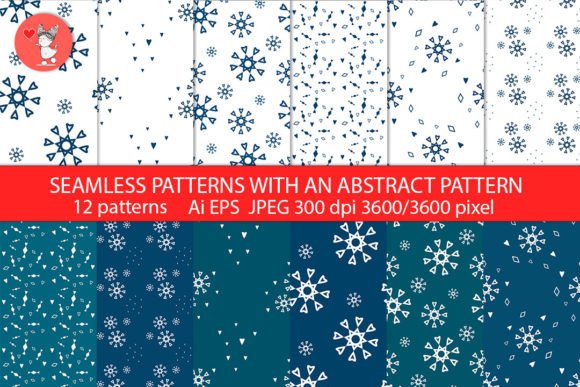
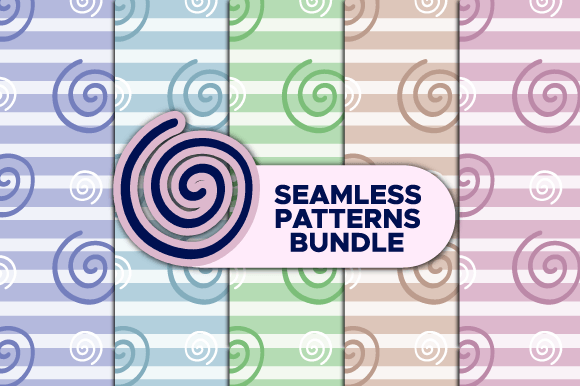
- Freelancers & Marketers: When designing social media carousels for a wellness client, a pattern geometric line circle abstract seamless blue line offers calm, modern energy. It works behind bold headlines, supports data visuals, and stays legible even when overlaid with semi-transparent text boxes.
- Hobbyists & Crafters: Someone printing custom washi tape or iron-on transfers for DIY planners often needs repeatable, cut-friendly designs. A modern rhombus swatch scales cleanly to any width—and because it’s vector, it cuts precisely on Cricut or Silhouette machines without jagged edges.
Why “Vector” Isn’t Just a Buzzword—It’s a Practical Advantage
When someone says “vector,” they mean flexibility you can feel. A geometric digital paper built in vector format lets you:
- Change colors in seconds—swap gold for sage green to match your brand palette, no redesign needed;
- Isolate individual shapes (like a single circle or line segment) to animate or reposition;
- Export at any size for print-on-demand services—whether it’s a notebook cover or a fabric bolt for Spoonflower;
- Layer multiple seamless patterns (e.g., a subtle line texture beneath a bolder rhombus grid) without file bloat or rendering lag.
This isn’t theoretical. A freelance illustrator told us she uses one minimalistic shapes file across three client projects in a week—each time adjusting stroke weight and hue, never redrawing. That’s time saved, not just pixels aligned.
Choosing the Right Pattern Isn’t About Style Alone
Before downloading or purchasing, ask yourself two practical questions:
- What’s the dominant content on top? If you’ll overlay body text, avoid high-contrast or dense arrangements like tightly packed circles. A seamless geometric pattern background with generous negative space—like thin intersecting lines spaced 12pt apart—keeps readability intact.
- Where will this live long-term? For printed materials (business cards, packaging), prioritize patterns with clear, open geometry—tight linework or micro-details can blur or trap ink during offset printing. For web use, lighter-weight lines and softer spacing (like the abstract geometric pattern with airy golden accents) render crisply on all devices.
Also worth noting: not all “seamless” files behave the same way in every program. Some SVGs retain editable layers in Illustrator but flatten in Figma. If collaboration is part of your workflow, test one file first—especially if teammates use different tools.
More Than Backgrounds—They’re Design Accelerators
Think beyond fill layers. A simple graphic print from this collection can become:
- A custom grid for UI wireframing—set as a non-printing layer in Figma to guide spacing and alignment;
- A watermark for client presentations—low-opacity, monochrome, and barely-there, but unmistakably yours;
- The base texture for a logo lockup—layered under letterforms to add depth without complexity;
- A consistent visual thread across a multi-channel campaign (email headers, landing page sections, slide decks) that feels intentional, not repetitive.
One small business owner used a seamless geometric golden minimalistic pattern as the unifying element across her entire rebrand—from invoice templates to Instagram highlight covers. Customers didn’t comment on the pattern itself—but they *did* say her materials “felt cohesive” and “trusted.” That’s the quiet power of consistency, done right.
Final Thought: Start Small, Scale Smart
You don’t need a full library to get value. Pick one pattern that solves an immediate need—a clean backdrop for your next Canva presentation, a subtle texture for your Etsy shop banner, or a printable planner page for your personal goals. Use it. Tweak it. See how it holds up when resized or layered. Then expand. Because Seamless Cloth Vector Patterns aren’t about collecting—they’re about removing friction, reinforcing identity, and giving your ideas room to breathe—visually and practically. When the foundation repeats without fail, everything built on top has room to land.